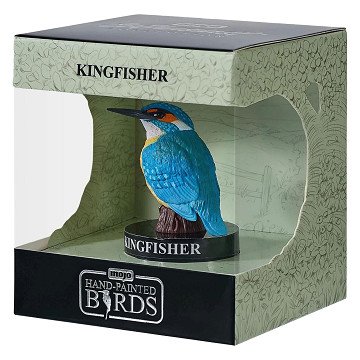
Collectible Mojo Garden Birds Kingfisher 381130
Dimension package:
11 x 10 x 9 cm
New
 Click the image to enlarge.


 Click the image to enlarge.


Available
Specifications
Found in the following categories:
| Itemcode: | 1285542 |
| Dimension package: | 11 x 10 x 9 cm |
| Suitable for: | From 3 years old |
| EAN code: | 5031923811300 |
| Price in euros: | Excl. VAT and excl. shipping costs |
| Colour: | Multi colors |
| Brand: | Mojo |
| Material: | PVC |


Safety


- Warning: Not suitable for children under 3 years due to small parts.
Others also bought
-
Mojo Garden Birds Robin 381126Log in for price information
-
Mojo Garden Birds Goldfinch 381127Log in for price information
-
Mojo Garden Birds European Goldfinch 381124Log in for price information
-
Mojo Garden Birds American Goldfinch 381125Log in for price information
-
Mojo Garden Birds House Sparrow 381128Log in for price information
-
Mojo Garden Birds Blue Tit 381129Log in for price information
-
Mojo Farmland European Goldfinch - 381110Log in for price information
-
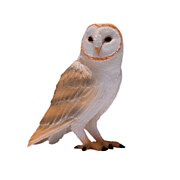
Mojo Wildlife Barn Owl - 381054Log in for price information
-
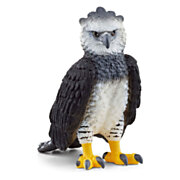
Schleich WILD LIFE Harpy 14862Log in for price information
-
Schleich Wild Life Hyacinthara 14859Log in for price information
-
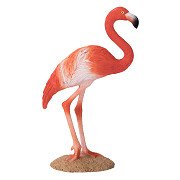
Mojo Wildlife American Flamingo - 387134Log in for price information
-
Mojo Wildlife Great Horned Owl - 387284Log in for price information